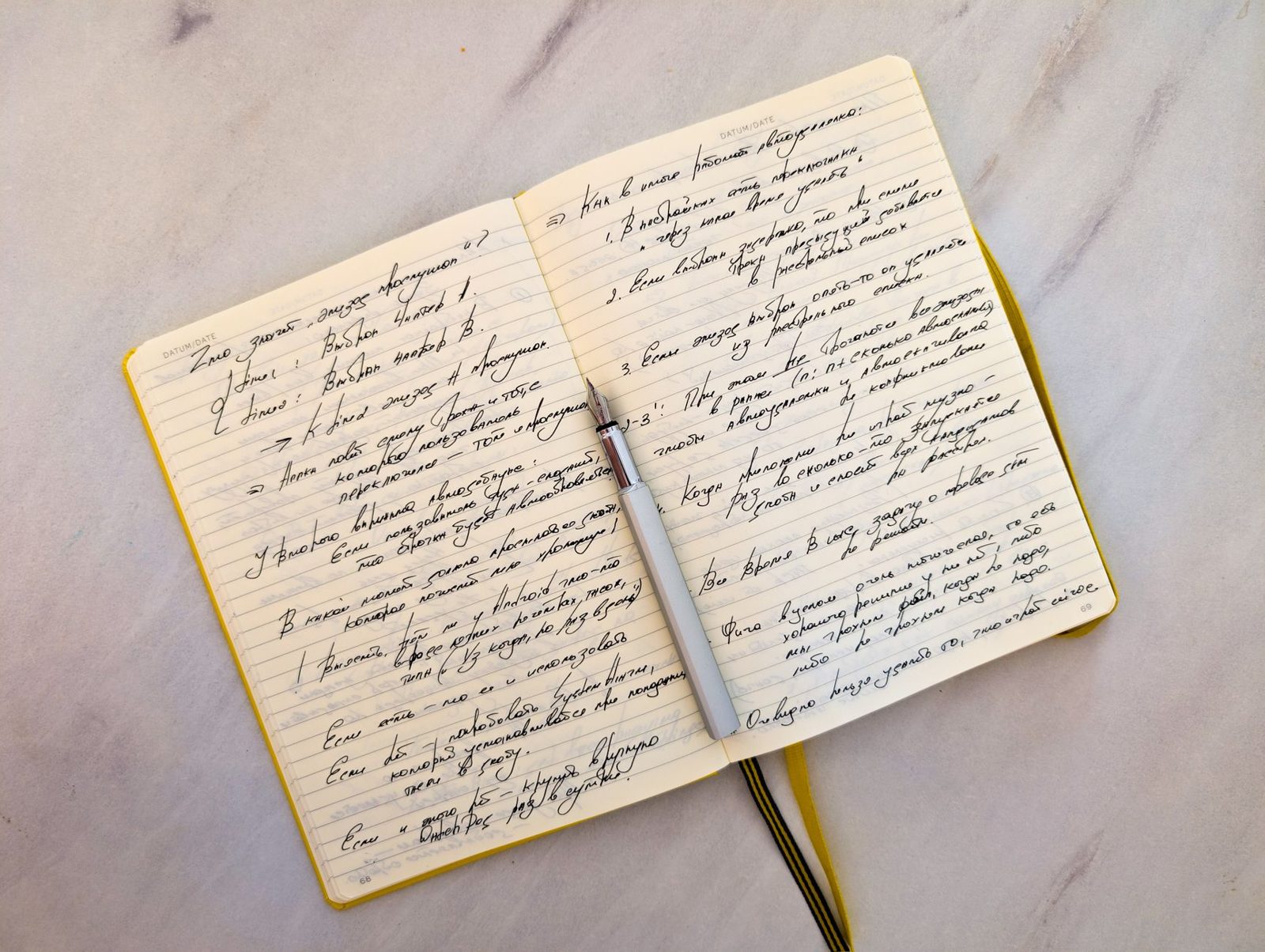
A commonplace book is a notebook of passages you have copied out by hand, gathered under headings so you can find them again. Before quote sites and screenshots, it was how serious readers kept what they read, and some of the most interesting people in history kept one. This is a short history of the habit, from a Roman philosopher’s bees to John Locke’s indexing trick and Thomas Jefferson’s teenage notebook, and how to start your own.
The idea before the notebook: Seneca’s bees
The principle is older than the name. In his eighty-fourth letter to Lucilius, titled “On Gathering Ideas” in Richard Gummere’s translation, Seneca argues that reading and writing should alternate, so that the fruits of one’s reading may be reduced to concrete form by the pen
. Then comes the image every later commonplacer borrowed:
We should follow, men say, the example of the bees, who flit about and cull the flowers that are suitable for producing honey, and then arrange and assort in their cells all that they have brought in
Seneca, Moral Letters to Lucilius, Letter 84, “On Gathering Ideas” (trans. Richard M. Gummere)
Note the two verbs at the end: arrange and assort. Collecting is only half the job. The other half is filing, and that is what turns a heap of quotations into a commonplace book. Seneca goes on to worry about whether bees make honey or merely gather it, which is exactly the question a good notebook raises about its keeper.
Heads, not dates: how a commonplace book is organised
A diary is arranged by time. A commonplace book is arranged by subject. Each subject is a “head”: Death, Friendship, Money, Letters, whatever you keep returning to. You copy a passage under the right head, note its source, and leave room for more.
The trouble starts when the notebook fills up. Heads multiply, pages run out, and finding anything means leafing through the whole volume. Every serious commonplacer eventually needs an index, and the most famous answer came from a philosopher.
John Locke’s new method
Locke published his system as A New Method of a Common Place Book. The 1911 Encyclopaedia Britannica dates it to 1686 and notes that it was his first article in Le Clerc’s Bibliothèque. An English version was printed among his Posthumous Works in 1706.
His trick is an index of just two facing pages, ruled into a grid of letters, with the five vowels under each letter. You file each head not by its full spelling but by two letters only:
in that Word regard is to be had to the first Letter, and the Vowel that follows it
📨 Get Free Essays And Quote Collections Alerts
Free · No spam · Unsubscribe anytime
John Locke, “A New Method of a Common-Place-Book”, in Posthumous Works of Mr. John Locke (1706)
His own example is the head Epistola. Its first letter is E and the vowel after it is I, so he looks in the index under E-I. If a page number is there, that page belongs to every head whose initial is E and whose first following vowel is I, and the new passage goes there. If not, he finds the first unused page, writes its number into the E-I box, and writes Epistola at the top of that page’s margin.
The beauty is that the index never grows. Two pages cover a notebook of any size, and the system works whatever subjects you choose. A programmer would call it a hash table. It still works in a cheap exercise book.
Thomas Jefferson’s literary commonplace book
Jefferson’s is one of the best-known commonplace books in American history, and a reminder that the habit was a young person’s education. Princeton University Press, which published Douglas L. Wilson’s edition in 1989, describes it as a notebook of his literary and philosophical reading, with most of its 407 passages entered between the ages of fifteen and thirty.
That age range is the interesting part. A commonplace book kept from fifteen to thirty is a record of a mind being built, passage by passage. You can see what a young reader thought worth copying long before you know what the adult did with it. Wilson’s edition adds notes on the authors and works Jefferson copied, a register of authors, and an illustrated essay on his handwriting.
The case against: Poe on memoranda
Not everyone trusted the method. Edgar Allan Poe, introducing his own “Marginalia” in 1844, made the sharpest objection to note-taking ever put in one sentence:
if you wish to forget anything upon the spot, make a note that this thing is to be remembered.
Edgar Allan Poe, “Marginalia”, Democratic Review, November 1844
He has a point. Copying a passage can feel like dealing with it, and a notebook can become a place where reading goes to be forgotten. The cure is the one Seneca prescribed: go back, reread, and write something of your own beside what you copied. Poe preferred to do that in the margins of the book itself, a habit we cover in our history of marginalia.
Three commonplace methods compared
| Method | Organised by | Strength | Weakness |
|---|---|---|---|
| Seneca’s bees (letter 84) | Digestion: reading alternated with writing | Turns quotation into your own thought | No system for finding things |
| Locke’s index (1686; English 1706) | Heads filed by first letter plus following vowel | Two-page index, never runs out | Several heads can share one page |
| Jefferson’s literary book | Copied passages, kept over fifteen years | A record of an education | Hard to search without an editor |
| A modern notebook | Your own heads, plus page numbers and editions | Cheap, portable, permanent | Only as good as your rereading |
How to start a commonplace book
- Buy a bound notebook with numbered pages, or number them yourself.
- Leave the first two pages blank for a Locke-style index: rule a grid with the letters of the alphabet and the five vowels under each.
- Copy exactly. Spelling, punctuation and italics as printed, then the author, title, edition and page. The internet is full of misquotations because people skipped this step; our quotes about reading shows how many famous lines turn out to have no source.
- Choose a head for each passage by its most important word, and file it under that word’s first letter and following vowel.
- Write a line of your own under each entry: why you kept it, what it contradicts, where you might use it.
- Reread once a month. A commonplace book is a tool for rereading, not storage.
If you want material to start with, our collections of the strangest sentences in classic literature and Jane Austen quotes with their chapters are already cited to the page. And keep Locke’s other small rule in mind: he wrote the head in large letters starting a little way out in the margin, so that only the heads stand out and the eye finds them at first sight.
Sources
- Seneca, Moral Letters to Lucilius, Letter 84, trans. Richard M. Gummere (Wikisource)
- 1911 Encyclopaedia Britannica, “Locke, John” (Wikisource)
- Posthumous Works of Mr. John Locke (1706), including “A New Method of a Common-Place-Book” (Internet Archive)
- Princeton University Press, Jefferson’s Literary Commonplace Book, ed. Douglas L. Wilson
- Edgar Allan Poe, “Marginalia”, Democratic Review, November 1844 (Wikisource)